

For California Accredited Investors Selling Investment Property in 2026
Defer Every Dollar of Capital Gains Tax Without Getting Caught by California's 1031 Rules
Federal 1031 rules are complicated enough. California adds three more layers most investors never see coming. Breakwater is a Southern California advisory firm that guides accredited investors through every stage of their exchange, from sale strategy through closing day, with full knowledge of what the FTB will come looking for. Even if you already have a QI lined up and think the hard part is done.
As Featured In


Based in Irvine, CA — Serving California Investors Nationwide
The California Problem
California Does Not Let You Simply Walk Away From a 1031 Exchange
Most investors know the federal rules: 45 days to identify, 180 days to close, use a QI. What most California investors don't find out until it's too late is that the state has built its own set of traps on top of those.
The 3.33% Withholding Trap
Miss one form and $66,600 gets held by the state on a $2M sale.
California requires mandatory withholding of 3.33% of the total sales price at closing, even for 1031 exchanges. To claim the exemption, you must file Form 593 before closing and certify the full exchange qualifies. Miss this step or receive any cash boot over $1,500 and the withholding triggers automatically.
The Clawback Provision
California tracks the deferred gain across state lines indefinitely.
If you exchange a California property for a replacement property located outside California, you must file an annual information return with the California Franchise Tax Board for the year of the exchange and every subsequent year until the replacement property is sold in a taxable transaction. Many investors complete a perfectly valid federal exchange, move to Nevada or Texas, sell their replacement property years later, and still owe California state tax on the original gain.
The FTB 3840 Filing Requirement
An annual compliance obligation that follows your exchange for its entire life.
You must file Form FTB 3840 every year until you sell the replacement property, even if you are no longer a California resident. Failing to file can result in costly penalties. This is not a one-time disclosure.
These are not edge cases. They apply to the majority of California investors completing an out-of-state exchange. Breakwater plans around all three before your property closes.
The Solution
What a California-Based 1031 Advisor Actually Does for You
Breakwater is not a DST sponsor. We are a dedicated 1031 exchange advisory firm based in Irvine, California. We work exclusively for the investor, not the sponsor, and our team has direct working knowledge of both the federal exchange rules and the California-specific compliance requirements that sit on top of them.
Here is what that looks like in practice:
Strategic Matching
Map your requirements before the 45-day clock starts.
Get your debt and equity requirements mapped to a qualifying replacement property before your 45-day clock starts, even if your relinquished property has not closed yet.
Nationwide Institutional Inventory
Access every major sector, not just one sponsor's availability.
Access pre-screened DSTs across every major sector, even if the sponsor your CPA recommended only carries multifamily.
Full-Cycle Coordination
Every California compliance obligation handled from day one.
Have every California compliance obligation handled from Form 593 through your annual FTB 3840 filing, even if this is your first out-of-state exchange and you did not know those requirements existed.
Get Your Exchange Right in Three Steps
Start Your Free California Exchange Analysis
Same-day inventory match based on your position.
Tell us where you are in your transaction. Sold, under contract, or still planning. We review your debt and equity position and match you to available inventory the same day.
We Build Your Replacement Shortlist
Pre-screened DSTs matched with California compliance built in.
Before your 45-day clock starts, we identify pre-screened DSTs that match your exact deferral requirements, flag your California-specific filing obligations, and coordinate with your CPA and QI so nothing falls through.
Close With Everything Handled
From Form 593 to annual FTB 3840 filing. You close clean.
From Form 593 coordination at closing to the first annual FTB 3840 filing, we manage every California compliance obligation through the finish line.
No obligation. No cost to review your situation.
What You Get Access To
Institutional-Grade Replacement Properties Matched to Your Exchange
Each offering includes full due diligence documentation, debt and equity specifications, and projected cash flow. Everything you need to make a confident identification before your clock expires.

Passco Riverside DST
Sponsor: Passco Companies, LLC
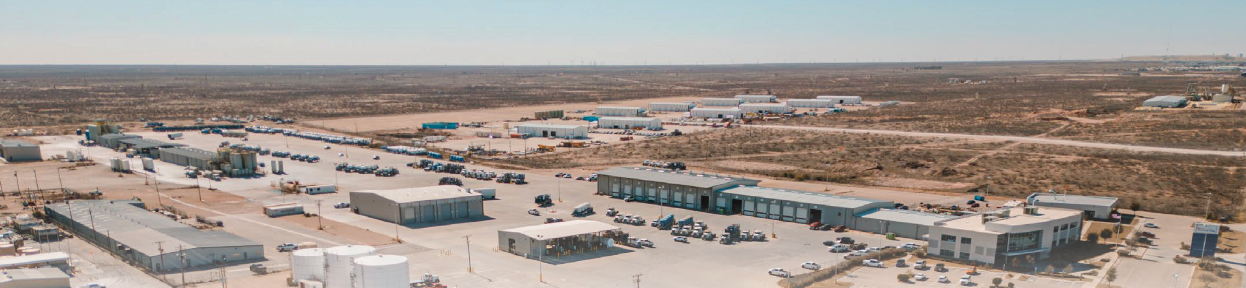
ERP 1031 Industrial Portfolio IV DST
Sponsor: Energy Related Properties (ERP)
Why Not Go Direct?
Advisory-Led vs. Direct-to-Sponsor: What You Are Actually Choosing Between
Inventory
Direct-to-Sponsor
Limited to what that sponsor sells.
Advisory-Led (Breakwater)
Full marketplace across all sectors.
CA Withholding Prep
Direct-to-Sponsor
Your responsibility.
Advisory-Led (Breakwater)
Coordinated before closing.
FTB 3840 Awareness
Direct-to-Sponsor
Rarely mentioned.
Advisory-Led (Breakwater)
Built into the planning process.
Debt/Equity Matching
Direct-to-Sponsor
Your responsibility.
Advisory-Led (Breakwater)
Handled and verified before identification.
Deadline Management
Direct-to-Sponsor
Your responsibility.
Advisory-Led (Breakwater)
Fully coordinated 45/180-day tracking.
CPA/QI Coordination
Direct-to-Sponsor
Your responsibility.
Advisory-Led (Breakwater)
Included. We manage the relationships.
Sponsor Alignment
Direct-to-Sponsor
Works for the sponsor.
Advisory-Led (Breakwater)
Works for you.
| Feature | Direct-to-Sponsor | Advisory-Led (Breakwater) |
|---|---|---|
| Inventory | Limited to what that sponsor sells. | Full marketplace across all sectors. |
| CA Withholding Prep | Your responsibility. | Coordinated before closing. |
| FTB 3840 Awareness | Rarely mentioned. | Built into the planning process. |
| Debt/Equity Matching | Your responsibility. | Handled and verified before identification. |
| Deadline Management | Your responsibility. | Fully coordinated 45/180-day tracking. |
| CPA/QI Coordination | Your responsibility. | Included. We manage the relationships. |
| Sponsor Alignment | Works for the sponsor. | Works for you. |
Going direct costs less upfront. A missed Form 593 or an annual FTB 3840 filing can cost you far more.

The Rules
Before You Sell, Know All of These
A 1031 Exchange can protect hundreds of thousands in equity. In California, there are more ways to lose that protection than in any other state.
Qualified Intermediary Required
You cannot receive or control the sale proceeds at any point. A QI must be engaged before your relinquished property closes. Do it after and your exchange is disqualified before it begins.
The 45-Day Identification Window
From the day of sale, you have exactly 45 calendar days to identify replacement properties in writing. The IRS offers no extensions and no exceptions, regardless of circumstance.
The 180-Day Closing Rule
Your replacement property must close within 180 days of your sale date. Miss this deadline and the full capital gain becomes taxable immediately.
California's 3.33% Withholding
California withholds 3.33% of your gross sales price at closing unless Form 593 is filed and the exchange qualifies in full. For a $1.5M sale, that is $49,950 held by the state. File correctly in advance and the exemption applies.
The Clawback Provision
If your replacement property is located outside California, the state still claims taxing rights on the original deferred gain. When that property is eventually sold, California will collect its share, regardless of where you live at the time.
Annual FTB 3840 Filing
Any out-of-state exchange involving California property requires an annual information return filed with the Franchise Tax Board every year until the deferred gain is recognized. This obligation does not expire when you move out of state.
Most California investors know rules 1 through 3. Rules 4 through 6 are where exchanges quietly fail, and where Breakwater planning pays for itself.
Credibility
16+ Years. $1.1B+ In Exchanges Guided. Based in Irvine, California.
Breakwater Capital is a dedicated 1031 exchange advisory firm. We bridge the gap between selling a California investment property and securing a tax-deferred legacy, for accredited investors who cannot afford to get it wrong.

Josh Chapin
President · 200+ Seminars on 1031 Exchanges
Josh has an extensive background in financial planning, specializing in unique investments and tax planning concepts. Since founding Breakwater Capital, he has developed deep expertise working with high-net-worth individuals and business owners — delivering thoughtful, personalized advice with a common-sense approach to complex strategies.
Series 7, Series 6, Series 63, Series 65, SIE, Life & Health
Supported by a Dedicated Exchange Team

Debbie Bannister
Certified Exchange Specialist · 18+ Years

Monique Wilson Kaiser
Senior Exchange Administrator · Since 1996

Naomi Booker-Abawag
Operations Manager

Taylor Pennington
Exchange Administrator · Since 2003
California-Based Advisory
We are not a national platform with a California checkbox. We are based in Irvine and work daily with the California-specific filing requirements, withholding rules, and FTB compliance obligations that affect every investor in this state.
Customized Portfolios
We specialize in scaling exchanges, splitting one large sale into multiple DST assets across sectors and geographies to meet your exact deferral requirements.
Client-First Philosophy
We work for you, not the sponsor. Our recommendations are built around your exchange, not around what is easiest to move.
Featured Offering
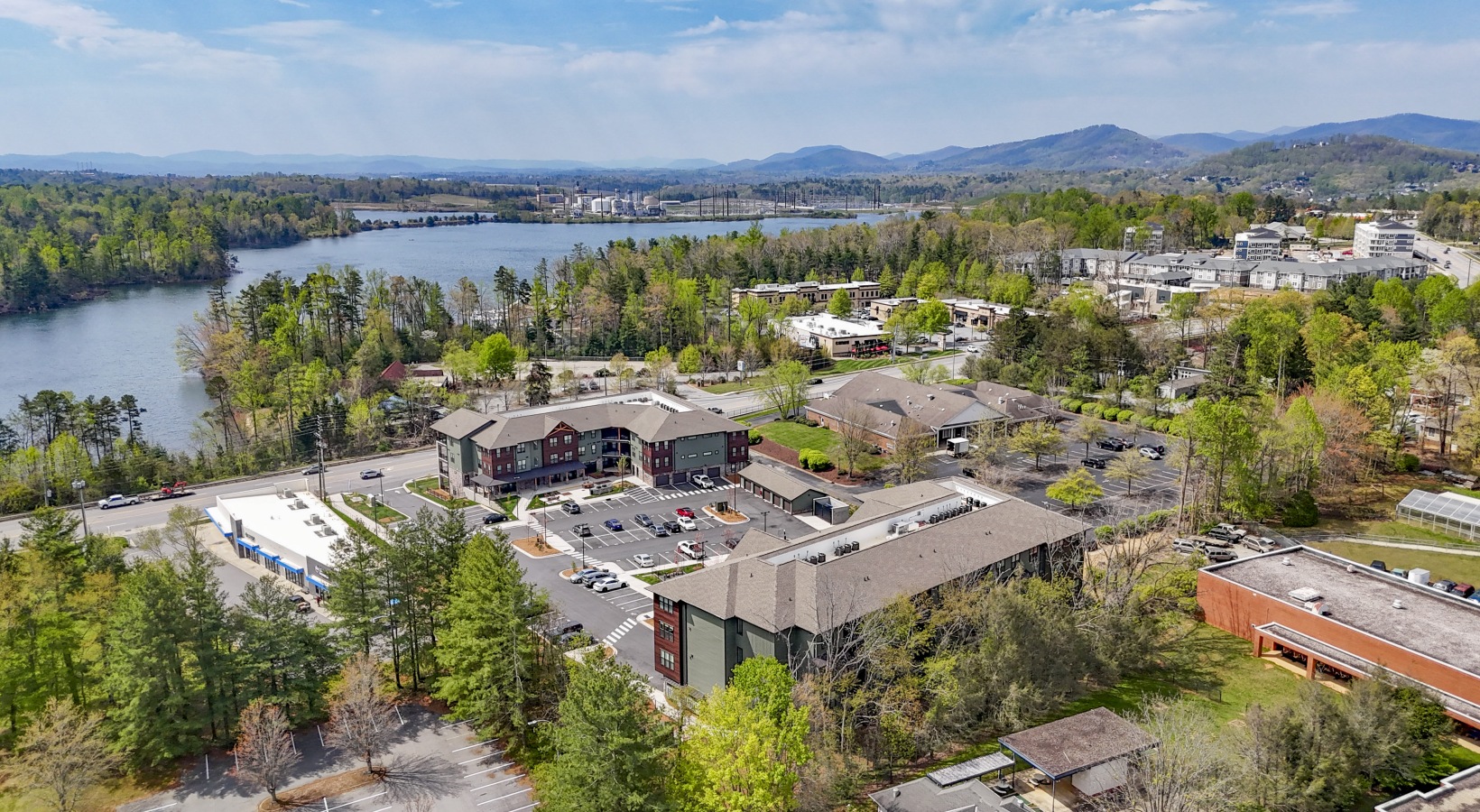
MCG Arden NC Multifamily DST
Sponsor: Madison Capital Group
A Class A garden-style community in a high-growth North Carolina submarket, with strong employment fundamentals and favorable supply dynamics.




Every week you wait to build a replacement shortlist is a week your 45-day window narrows. California investors who start after closing find their best options are already gone and their worst options are whatever is left. The FTB does not care about your timeline. Start before it starts for you.
Two Ways to Get Started
Still planning your sale?
Request the Breakwater DST Overview. We'll walk you through current inventory, show you how debt and equity matching works, flag your California-specific filing requirements, and help you build a replacement shortlist before your property ever hits the market.
Already sold or closing soon?
Your 45-day clock may already be running. Call us directly and we'll prioritize your file today.
Schedule a ConsultationNo obligation. No cost to review your exchange situation. If Breakwater is not the right fit for your transaction, we will tell you that clearly and point you toward who is. You have nothing to lose by starting the conversation and potentially hundreds of thousands to lose by not starting it soon enough.
© Copyright 2025. All rights reserved.
IMPORTANT: Our Intent Is Not To Sell Nor Does Our Website Or Content Be Considered An "Offer To Sell" Securities. The Content On Our Website Is Education Purpose Only. Please Consult With An Attorney Or Your Local CPA To Determine If The Securities And Strategies Are Best For You And Determine The Tax Or Legal Consequences Of Any Particular Investment Or Strategy. Any Investment Or Strategy Involves Risk.
Legal Disclaimer
Privacy PolicyThe contents of this communication: (i) do not constitute an offer of securities or a solicitation of an offer to buy securities, (ii) offers can be made only by the confidential Private Placement Memorandum (the "PPM") which is available upon request, (iii) do not and cannot replace the PPM and is qualified in its entirety by the PPM, and (iv) may not be relied upon in making an investment decision related to any investment offering by an issuer, or any affiliate, or partner thereof ("Issuer"). All potential investors must read the PPM and no person may invest without acknowledging receipt and complete review of the PPM. With respect to any "targeted" goals and performance levels outlined herein, these do not constitute a promise of performance, nor is there any assurance that the investment objectives of any program will be attained. All investments carry the risk of loss of some or all of the principal invested. These "targeted" factors are based upon reasonable assumptions more fully outlined in the Offering Documents/ PPM for the respective offering. Consult the PPM for investment conditions, risk factors, minimum requirements, fees and expenses and other pertinent information with respect to any investment. These investment opportunities have not been registered under the Securities Act of 1933 and are being offered pursuant to an exemption therefrom and from applicable state securities laws. All offerings are intended only for accredited investors unless otherwise specified. Past performance are no guarantee of future results. All information is subject to change. You should always consult a tax professional prior to investing. Investment offerings and investment decisions may only be made on the basis of a confidential private placement memorandum issued by Issuer, or one of its partner/issuers. Issuer does not warrant the accuracy or completeness of the information contained herein. Thank you for your cooperation.
Securities offered through Emerson Equity LLC Member: FINRA/SIPC. Only available in states where Emerson Equity LLC is registered. Emerson Equity LLC is not affiliated with any other entities identified in this communication.
1031 Risk Disclosure:
There is no guarantee that any strategy will be successful or achieve investment objectives; Potential for property value loss – All real estate investments have the potential to lose value during the life of the investments; Change of tax status – The income stream and depreciation schedule for any investment property may affect the property owner's income bracket and/or tax status. An unfavorable tax ruling may cancel deferral of capital gains and result in immediate tax liabilities; Potential for foreclosure – All financed real estate investments have potential for foreclosure; Illiquidity – Because 1031 exchanges are commonly offered through private placement offerings and are illiquid securities. The secondary market for these investments is very limited, and early sale is not guaranteed. Reduction or Elimination of Monthly Cash Flow Distributions – Like any investment in real estate, if a property unexpectedly loses tenants or sustains substantial damage, there is potential for suspension of cash flow distributions; Impact of fees/expenses – Costs associated with the transaction may impact investors' returns and may outweigh the tax benefits.
Real Estate Risk Disclosure:
There is no guarantee that any strategy will be successful or achieve investment objectives. Potential for property value loss – All real estate investments have the potential to lose value during the life of the investments. Change of tax status – The income stream and depreciation schedule for any investment property may affect the property owner's income bracket and/or tax status. An unfavorable tax ruling may cancel deferral of capital gains and result in immediate tax liabilities. Potential for foreclosure – All financed real estate investments have potential for foreclosure. Illiquidity – These assets are commonly offered through private placement offerings and are illiquid securities. There is no secondary market for these investments. Reduction or Elimination of Monthly Cash Flow Distributions – Like any investment in real estate, if a property unexpectedly loses tenants or sustains substantial damage, there is potential for suspension of cash flow distributions. Impact of fees/expenses – Costs associated with the transaction may impact investor's returns and may outweigh the tax benefits. Stated tax benefits – Any stated tax benefits are not guaranteed and are subject to changes in the tax code. Speak to your tax professional prior to investing.
Opportunity Zone Disclosures:
Investing in opportunity zones is speculative. Opportunity zones are newly formed entities with no operating history. There is no assurance of investment return, property appreciation, or profits. The ability to resell the fund's underlying investment properties or businesses is not guaranteed. Investing in opportunity zone funds may involve a higher level of risk than investing in other established real estate offerings. Long-term investment. Opportunity zone funds have illiquid underlying investments that may not be easy to sell and the return of capital and realization of gains, if any, from an investment will generally occur only upon the partial or complete disposition or refinancing of such investments. Limited secondary market for redemption. Although secondary markets may provide a liquidity option in limited circumstances, the amount you will receive typically is discounted to current valuations. Difficult valuation assessment. The portfolio holdings in opportunity zone funds may be difficult to value because financial markets or exchanges do not usually quote or trade the holdings. As such, market prices for most of a fund's holdings will not be readily available. Capital call default consequences. Meeting capital calls to provide managers with the pledged capital is a contractual obligation of each investor. Failure to meet this requirement in a timely manner could elicit significant adverse consequences, including, without limitation, the forfeiture of your interest in the fund. Leverage. Opportunity zone funds may use leverage in connection with certain investments or participate in investments with highly leveraged capital structures. Leverage involves a high degree of financial risk and may increase the exposure of such investments to factors such as rising interest rates, downturns in the economy or deterioration in the condition of the assets underlying such investments. Unregistered investment. As with other unregistered investments, the regulatory protections of the Investment Company Act of 1940 are not available with unregistered securities. Regulation. It is possible, due to tax, regulatory, or investment decisions, that a fund, or its investors, are unable realize any tax benefits. You should evaluate the merits of the underlying investment and not solely invest in an opportunity zone fund for any potential tax advantage.